Featured post

Finding your tribe

One of the most enjoyable and inspiring books I have read this year has been Sir Ken Robinson's "Out of our Minds"  and my ref...

Saturday, 1 August 2026

Pick a side.


Berlin stadium photo by @warwicklanguage CC BY


Time ticks on and increasingly I am reading more about the impact of technical developments. I have written of my reading and thoughts of the endless march of the techbros on my Espace Sisyphe blog. From my sideline position as a retired teacher and educational technologist it is getting harder and harder not to take a stand and refuse to tacitly approve of the many technologies that I have, in the past, used and recommended to others. This is particularly the case as I see the dilemmas faced by current practitioners who are both asked to promote and encourage the use of technology whilst also struggling to balance concerns about wellbeing and educational values for their students. It reminds me of a biblical citation from my distant past where I was expected : "to be in the world but not of the world"


Mozilla recently shared an excellent explainer video about the changed landscape online:


So far I have focussed on expressing my critical appraisal of educational technologies, maintaining that there are certain principles I would  apply when making technological choices:

- is your choice of activity using a digital tool/s going to help your learners without putting them in danger? (privacy,equity, safety)

- how sustainable is this activity? can you export and keep your content in a useable form? does the authoring tool acknowledge your rights and those of other contributors? (creativity,respect, environmental impact)


Now even these critical choices are more difficult to apply due in part to the ubiquity of so called AI which is often built in by default and the lack of transparency of the algorithms it employs. It is also clear that the Enshittification is well underway - the focus of those companies who had claimed to be offering educational value no longer value learners, but rather prioritise the money and power they now wield. Maybe that was always the case. We are increasingly suffering increased costs (including climatic changes and environmental destruction) as a result of their determination to achieve their techbros dreams. 

I recommend taking a listen to the Marsh family song (inserted below) about Silicon Valley and checking out the William Shockley tale on Wikipedia


There are still trustworthy networks out there but they need our support more than ever so don't forget to contribute to keep them alive! Think on about the photo I have used in this post too...


Wednesday, 18 March 2026

ONL261: the open journey continues


 When I was contacted through LinkedIn and invited to contribute to the next ONL course, ONL261 I was more than happy to accept the invitation. Back in 2017 I had contributed to the Open Networked Learning course, ONL171 which was then under the leadership of one of my greatly respected contacts, Alastair Creelman, who was working in Sweden. We have both now retired. 

The session I am contributing to is under Topic 2, as was my previous contribution. This invitation has given me an opportunity to look back over the many years of open practice since I first embarked on my online work and to share my thoughts on the changing online landscape so neatly described by Cory Doctorow and the Enshittocene. As I looked back on my online interactions I could feel the idealism and excitement which gripped me back in the early 2000's. We were living in a world of new opportunities - chances to make access to learning more accessibile and connected than ever before. How the world has changed! My session therefore will focus on the care and critical insight which are even more necessary now than they were then. 

Photo of the book cover Enshittification by Cory Doctorow
A must read! Photo CC BY @warwicklanguage


I have put together some resources on a Padlet board for ONL261 to connect the then and now. I have also used my Creative Commons certification activities to set up a quiz which I hope anyone can enjoy and use as a fun way of exploring the challenges of open sharing. 

I am looking forward to sharing and learning with ONL261 next week. I will add my reflections on this blog. In the age of AI and the broligarchy we need human networks more than ever. 

Wednesday, 31 December 2025

Of genies and bottles...


Photo of cartoon in The Guardian November 23rd 2025


This time of year it is usual to reflect upon what you have achieved and perhaps set goals for the coming year. I'm going to look somewhat longer term as I feel we are reaching a point of no return and need to urgently address matters which could be catastrophic if they remain below the radar of our societal conscience. 

It is my privilege to continue to work with colleagues from UNICollaboration on virtual exchange and this has kept me researching the use of technical and digital tools for connecting educators and students across continents. I have reflected on my learning openly - as here on my Espace Sisyphe blog - showing my increasing concern about the power and influence of the wealthy controllers of many of our now limited numbers of tech platforms. Where the internet was once a place of lively, largely constructive debate and a source of help and community for many it is increasingly a dangerous, exploitative environment which requires greater skill if you are to avoid being targetted by nefarious forces. I also voluntarily work alongside the most amazing and well informed team of Future Teacher UK  to ensure that the best advice for teachers in terms of equitable access to education is shared openly and without commercial bias. 

So I feel I have been doing what I can post retirement from my position as an onlooker whilst maintaining my open education principles. I feel nonetheless that the sisyphian task is only getting more difficult as AI rapidly infects every aspect of our universe, becoming an existential threat on all that was great about the WWW. I found this interview with Sir Tim Berners-Lee really worth a listen. His belief that things may all work out is tempting but I'm afraid the big money and the greed of the Broligarchy may defeat the higher minded "public good" ethos I embrace and wish to see sustained. I salute him for maintaining dialogue with those who would spoil the internet we loved, he is the better man.

There can be no doubt that the AI race is already exacting huge environmental harms at a time when politicians still fail to enact policies to address global warming and when many world leaders are happy to talk down the risks. With outside interference in elections, democracy itself is under fire. We are standing by and even complicit in the endless exploitation of our planet's resources - that is the water and the air we need to live - so that the super wealthy can fulfil their greedy, selfish desires.  Companies with greater wealth that many nation states push ahead with data centres whilst claiming that AI will save us all - believe me they have no interest in the rest of us!

 So what can I do? 


  • Keep calling out the fake and the falsehoods
  • Listen to trusted critical thinkers (such as Cory Doctorow, thanks Father Christmas!)
  • Resist the hype and mock those who try to fool us
  • Make decisions which take power away from the wealthy. 
In the immediate, I am moving more of my reflective writing away from online spaces and back to pens and paper in the coming years. I continue to review critically the use of social media and online platforms to find more ethical spaces. I am not afraid to call out the realities of poor personal security practices online and exclusionary teaching technologies, their impacts are so negative. Please allow time as you reflect to take a deeper, critical dive into the real consequencies of the digital actions and choices you make. It is not easy but you are not alone.

Photo of my copy which came this Christmas


Wednesday, 27 November 2024

Keep on moving


Boy bands are back in style again so I hear on my radio! I had 2 young sons in the 1990's and they loved a little boogie to a boy band. This was one of my favourite tracks from that era and it has resonance for me again today. My Twitter (X) account is now removed and I have to move on. I had used it to authenticate a few of my other accounts so now I need to pick them up in new ways. 

I had used List.ly now and again but could no longer access my account as it was tied to Twitter. I can see no other choice but to set up a new account but just so I don't lose the lists I had made, here they are:

My lists on list.ly

So, onward! Here's my first list on my new account.


This migration away from X was a timely reminder to review all my accounts and address some of the long forgotten ones. Doing this periodically is really important as abandonned accounts present an opportunity to mischief makers online. The list above was made to share the learning and encourage others to carry out some spring (or winter) cleaning. Internet scammers are getting even more ruthless and there's no doubt that they are quick to pick up on vulnerabilities and exploit new technologies such as AI in order to line their pockets. 

Many educators had to climb a steep learning curve through the pandemic and we need to support each other in staying safe online. It may help to think about how you protect yourself when you are away from home in an unfamiliar environment. No less care is needed online. We are now in an era of deep fakes and industrial scale exploitation of technology, critical digital skills could not be more important. 

In the process of revisiting my digital online presence I remembered  that another of my occasional tools, Haiku Deck, was linked to my Twittter (X) account. I investigated a link on my online CV but the site was not reachable. Fortunately the session had been recorded and that was still available. I'm including it here as I think it is very relevant to our situation today. Technology is changing rapidly and poses many challenges. This presentation (at a Mahara eportfolio event in 2015) is about the nature of learning in the internet age. 


Tuesday, 24 September 2024

Transitioning - a liminal space


Navigating the landscape - photo by @warwicklanguage CC BY SA


The academic year 2024 has just started. Not for me though. For me this is the third year of retirement and I am still in the process of transitioning from the professional me to the personal me - identities which have been enmeshed for so long it is tricky to navigate. When I read this post from Alastair Creelman, I was reminded that I need to continue to work on my navigation skills. I always found his blog really helpful and I felt rather sad to read that he would no longer be posting, although I fully understand and respect his reasons. I tried to add a comment to reflect how important his thoughts have been along the way but sadly it did not appear. So if you read this Alastair please know I am grateful for your open sharing and for how you helped me. 

Another blog post which influenced my own thoughts on transitioning came from another open hero of mine, Martin Weller. This post  is so significant as it captures the ongoing challenges of our time and reminds me of the importance of fighting for open practices. This has been an aspect of my professional life which transcends the "employment" phase and is deeply embedded in my personal psyche. I have reflected often as to whether, post retirement, I should continue to research and publish. I am still in two minds on this. I don't lack things to do to be honest!

There is one area of openness however where I feel progress is not where it needs to be yet and where I can hopefully continue to be of use. It is the area of open recognition. I think I find this so important because it goes to the very heart of my commitment to self determination (both political and psychological). The technical mechanisms include ownership and curation of an eportfolio and collection and curation of open badges. For me these tools have so many uses:

  • fostering community belonging and pathways to self development
  • offering recognition and encouragement in online fluency
  • supporting creative activity in assessment and knowledge creation
  • providing safe spaces for experimentation and individuality
Life in the age of AI will bring bigger challenges and some temptations which we must review critically. Spoiler alert: Open AI - it is NOT Open, nor is it Intelligent. This is an age which must relish in the nature of the human, must celebrate our creativity and diverse intelligences. Academia and our educational instutions must embrace the opportunity to be on the right side of history. Money and league tables must matter less; values and integrity must dominate your futures. 

I can see my next steps more clearly now. Funny how blogging helps. 


Saturday, 27 April 2024

Staying on board


My teaching career began in the 1980's and, as I have mentioned on this blog before, I was an early adopter of technology in language teaching. The Internet was not widely used in education for some years to come but my professional teaching career was to be hugely shaped by it's birth. I lived through the "advice" which came our way, some of it helpful, much of it erroneous and lacking in awareness of the contextual realities of teaching in the 20th Century. The 21st Century picture is not hugely different. Change is never easy, the future is "not very evenly distributed" The video remix above is just one example of the issues educators face with the challenges of working in the digital domain. Legal and ethical issues as well as practical choices continue to make the teaching ad learning environment one which requires collaborative effort, critical awareness and co-operation. I consider myself to have been fortunate to find and participate in great networks to support my understanding of learning technology such as EUROCALL and ALT. I was fortunate enough to be able to research and publish in my academic field whilst working at the University of Warwick.

I am no longer employed in schools or University, having retired at the end of 2020 after 30+ years but I don't feel able to step away completely at this stage. I continue to offer my skills, such as they are, to organisations such as EUROCALL as a Trustee and member of the Executive, and to the not for profit UNICollaboration . I am also proud to be able to contribute to the voluntary work of Future Teacher 3.0 and #LTHEchat.  The continuation this offers has enabled me:
  • to maintain a sense of belonging
  • to keep my knowledge up to date
  • to enjoy fellowship with kindred spirits
I write this post to share the changes I have experienced since retirement as they may be of interest to others. 

Firstly, as I no longer have an institutional affiliation, I have of course lost access to some of the privileges I enjoyed as an academic staff member. Most significant of these is access to academic publications which live behind paywalls. As I favour open publishing I am glad that I can still read the work of those who share openly. 

Secondly, as a pensioner I examine my budget regularly and no longer use Microsoft products. Expensive licences are not justifiable for personal use, I prefer to pay less and get great value from Google storage and Chromebook use. I use my more limited means to support great folk such as Bryan Matthers and his Fabulous Remixer Machine  to campaign for greater fairness and sustainability and to maintain my own websites. 

Finally, I use my knowledge and skills to help newer practitioners make informed choices and to warn of the dangers of technological evangilism. I do so by sharing openly on my blogs and through maintaining curations such as my Tool Parade dynamic document and my Pearltrees account. I worry that education has a shorter memory than ever before as experienced teachers are considered to be too expensive and retention is now a huge issue. Never mind the impact of AI on our sector! 

I guess I won't be around forever but at least I can leave a digital legacy.


Wednesday, 24 January 2024

The future's bright...

Trees burning in a forrest fire


                                        Image by Ylvers from Pixabay

Some of you may remember the tag line of a telecoms company that went:
The future's bright, the future's Orange

I have been reflecting on my participation in the Future Teacher 3.0 network and the connections between the future, the orange flames illustrated here, the nature of forest fires and technology are all coming to my mind. I last wrote about the impact of Future Teacher 3.0 nearly two years ago.

Now I wish to reflect more urgently on the nature of this network and the resources it provides. Urgently because time is running out, we are (if you hadn't noticed, let's face it our government hasn't) in a global climate crisis. We are also at 90 seconds to midnight on the Doomsday clock.  The orange future is upon us like a forest fire. Education is urgent, must be accessible to all, sustainable and free from bias if it is to help humanity to face the future. Importantly, it needs to be trully sustainable. 

How does Future Teacher address this urgency? 

  • the resources it contains offer a comprehensive digital snapshot of technology enhanced learning in 3rd sector education spanning many years. We can learn from the past to better face our future
  • the community it has created over 7 years is vibrant and supportive. You can connect on our LinkedIn group we have recently moved away from the burning hotspot of X formerly aka Twitter. We are better together.
  • The shifting sands of technologically "enhanced" teaching and learning bring big challenges and a need for critical thought. We have to watch our step.
  • As educators we have a responsibility to ensure access for all, push back against bias, exclusion and discrimination. We must keep our eyes and our hearts open. 
Urgent action has been happening in Future Teacher 3.0 over a prolonged period thanks to a small group of committed individuals who got together supported by a little European funding and decided to keep going after the funding finished. That activity is captured on the You Tube channel with subtitles added to increase accessibility for all because it matters. We will be reflecting on the latest series of webinars shortly because urgent action in a crisis is best when it is based on informed, intelligent decisions rather than unthinking knee jerk reactions. I am very proud to a be team member and to be able to contribute in a small way by recognising through an open badge the work shared freely by others. 

If we can incorporate these resources into our teaching communities we have the possibility of the hope of a better educated, more sustainable way forward in education. The growth that often we are told follows forest fires, pushing up from the grass roots.

Snowdrop by Teresa MacKinnon CC BY


Saturday, 7 January 2023

Anti-social social media?


TAGS explorer image from 2017


New Year, new ways of connecting to explore. I have invested many hundreds of hours over the years in developing my use of social media channels in order to inform and amplify the causes I support, notably :

 language learning and teaching (I was Communications rep for UCML for some years), 

european language networks (I still hold a communications role for EuroCALL)

open education (curating on open practice and through the Open Ed SIG) and

virtual exchange (communications for UNICollaboration - a not for profit organisation) and many other projects such as the #knowhow one in 2017 (illustrated above). 

My use of Twitter has been fundamental to all of these roles. The open nature of the platform enabled me to make connections and build a network. I became proficient at using tools such as TAGS Explorer and Wakelet to curate tweets and provide insights against hashtags which could inform strategic direction for these causes. The networks and connections have made a real difference to my professional and personal life. 

Image from Pixabay CC0


I am very used to internet based tools changing and even disappearing (remember Storify?) but the latest changes on Twitter are without doubt challenging. Musk's impact on the company, the workforce and the integrity of the service are very worrying and often inhumaine. I have covered several bases therefore and, with the help of other open education practitioners I have extended my use of both Discord and Mastedon. Clint Lalonde's blog post is helping me find my way on the latter. He is a wonderful example of the importance of being an open educator - taking the time to log what you learn really helps others. It is a selfless act undertaken out of care. 

The openness of social media has been vital to the visibility of connections such as this, likeminded educators have been able to share wisdom. Sadly we only hear about the more negative aspects of openness such as the use of platforms to spread false discourse and harmful abuse. I have always maintained that we need to be present in such environments in order to understand how they work and call out abuse. In much the same way as bringing light to dark environments in physical spaces. 

I recently attended at #socmedHE22 conference hosted at Northampton Uni by the lovely Hala Mansour where I was able to share my #openbadges work and meet up face to face for the first time in ages with old and new friends for the first time since the first lockdown.  My second attendance at this small but likeminded grouping. Many friends have been contacts through #LTHEchat another vibrant network of open practice which relies on Twitter as a platform. It is clear that many years of interaction will be lost if we all decided to leave en masse. Not something I can bear to contemplate so I stay and curate my Twitter feed with a vengeance to block and mute the voices I cannot tolerate. 

As many uses of social media become "mainstream" parts of organsational communications strategies there will no doubt be further attempts to monetise the content and control the discourse and so those of us who work (unpaid of course) to uphold social justice will have to continue to consolidate our networks, amplify our influence to counter the voices of the powerful, wealthy 1% and treasure our values. Currently I am experiencing Discord and Mastedon as places where this can happen. I hope to see that further through the OER23 conference backchannels too. Once platforms move behind paywalls more people will be excluded from participation and the existing inequities are further widened. I am therefore placing a call to arms for those who are active in this space to consider the ethical implications of their actions. We have much to lose. On a personal note I will also continue to support and advocate for the work of the Internet Archive as a means of protecting years of recent history mediated through social media platforms. 


Monday, 7 November 2022

Use your ears!


Often when teaching language I have told my students that they have just 2 ways to help their brain do what it is wired to do - acquire language. Teachers can find lots of original and fun ways to teach language but it is the learner's brain that is best placed to figure out how to produce language well, it will go on doing so throughout their future, beyond the classroom, if they give it the chance. 

Despite there being 2 ways to help the language learning process by letting examples of usage in, many spend far too long only using one of them. What are the two ways? 
  • through the eyes: eg.reading
  • through the ears: eg.listening
The "captioning effect" is well researched, a powerful way of combining both forms of input. It was my desire to facilitate listening opportunities online that first brought me into contact with Mark Childs at Warwick University many years ago. He supported my plan to run a professional development session on the importance of voice. I used a digital recording of a baby crying to open the session. That got everyone's attention and how they begged me to make it stop! I think it proved a point - human beings are touched at a very deep level by the souds we hear. Voice is powerful and too often we use our ears selectively as we get older, tuning out the voices we don't want to hear. Older language learners have to reconnect with the often uncomfortable feeling of listening. 

This week I am delighted to be back working with Mark and another friend I have met through ALT, Jane Secker. With my #LTHEchat hat on, I am happy to say these two fab folk will be leading this week's @LTHEchat. And the focus is upon podcasting - a great way to use your ears. I am a fan and have been listening to podcasts for many years, using the old Juice podcaster back in the day.  I love to listen to a comedy podcast before I go to sleep, more recently I have been inspired by the wonderful Pedagodzilla, enjoyed the 25 years of Ed Tech podcast , been interviewed for the Education Burrito and there's another interview on my work with eportfolios coming soon. These are just a few of my many subscriptions now on Google Podcasts. Digital technology has made it so much easier to catch up on conversations at a time and place that suits us. We have come a long way since the days of endless buffering online. 

I embedded listening into my teaching from the early days. When I started teaching we used a reel to reel tape recorder to play audio in class, I later prouced personalised cassettes for students and found it greatly increased their engagement. Since all went digital I have used Soundcloud and digital recorders to provide audio and oral opportunities for my learners and indeed for many purposes. I was an early adopter of audio feedback and when done well this is really appreciated by students. 

So is listening to podcasts just #podcrastination? 
Well, if you want to learn and time is, inevitably, short why would you only use 50% of the resources available to you? 

UPDATE:
My latest podcast on #eportfolio use is available now 
https://podcast.mahara.org/2018360/11549188-teresa-mackinnon-professional-portfolios-values-and-transferable-skills


Monday, 21 February 2022

Future Teacher 3.0: Reflecting on impact

wise owl


Image by Chräcker Heller from Pixabay


This year sees a new venture added to my retirement activities. An unexpected invitation came from the UK Future Teacher 3.0 team and this was too good an opportunity to turn down. The small UK team are an absolute powerhouse, a great example of how much can be achieved with the right blend of experience, and expertise and a shared commitment to inclusive practice in teaching. Lilian, Alistair and Ron have orchestrated monthly webinars for teachers in HE and FE since 2017 firstly as part of an Erasmus Plus funded project but now unfunded and undaunted! I have had the privilege of contributing to several sessions over the years and I really value the network and the resources they create as OERs. 

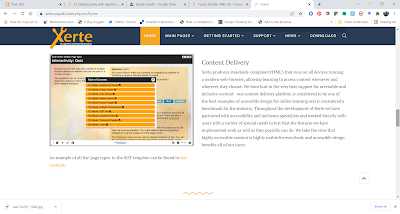
Using an open source tool called Xerte they are able to create reusable learning objects which include interactive content and are media rich and accessible. 


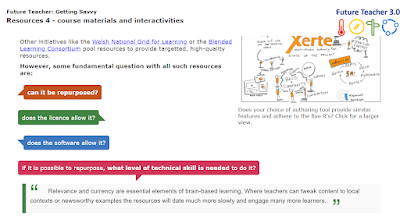
I have used the Tool Savvy resource from the 2018 webinar series several times as part of my work on tool choice for UNICollaboration and it is so good to be able to focus minds on key questions when choosing authoring tools. Xerte also means that our trainees can learn about tools whilst using one of the best examples available. 


So this is a network that lives the values of its originators, in the same way as we in #virtualexchange like to "walk the talk". So you can see why I was so excited to be asked to join the team this year. 

Of course, one of the bugbears of doing anything at the "bleeding edge" is that new tools and approaches are constantly being developed but the FT3 UK team have even turned this to an advantage! The second iteration of webinars was Reactivated -bringing new ideas to enhance the earlier recordings and this current series is Reflected, where the focus is on building upon what we have learned through reflection "because future teachers never stop learning". 

In my final years at Warwick I led a course for final year students who were considering teaching as a career. Central to my course design was both virtual exchange and reflection. We used an open source tool Mahara as a private reflection space and students were able to keep private journal posts every week which could, if they so wished, be used as part of their assessed eportfolio. This process of regular reflection incorporated into the course design helped to establish the importance of reflection to those working in time constrained and often demanding roles in teaching. Taking time to take account of how you are feeling and to, over time, develop a picture of the direction you wish to take - these things are so important in life. Sharing some of these thoughts with others can also help to strengthen your professional network and can even lead to unexpected outcomes such as new connections. 

I'm not great at sticking to routines but I do use my blogs to think things through and it has been helpful over the years. Reflecting through writing on a diary or a blog can really bring my thoughts into focus and help me find a way forward. I look forward to reading reflections from others who have been part of the Future Teacher network.


Monday, 10 January 2022

Fair Use or Misuse of open badges?


Screenshot of point of "badge" issue 


Over the weekend I got a notification on Twitter that I had been awarded a badge. Those who know me will know that I am usually enthusiastic about collecting badges, especially those which help me to keep track of the events I have presented at or recognise new skills I have worked to master. This one was odd though. It claimed to be a fake english language teaching certificate, TEFL. 

English is my first language but I have never been interested in teaching it. I loved learning other languages and chose to specialise in teaching French and Spanish. So where had this badge come from and why had it come to me? 


Intrigued, I followed what links were available. The badge had not been issued to my email address so it didn't exist as something I could accept (or rather reject!). So why did it bear my name? I queried the twitter account which had sent the tweet. I am writing this post as a record of what I discovered but I have removed the details of the "issuer" to spare his blushes, since he has now apologised and I can only accept that apology with good grace. Having engaged with the twitter account in question I also contacted the VP of the platform which had been used, someone I have interacted with before online and who I have always found to be trustworthy. I am grateful to Nate Otto for his prompt engagement. 

Here are some screenshots of the interactions that followed (read below in reverse order). The details of the "issuer" have been redacted for the reasons I outlined above. He has since removed the tweets to me and I have blocked him from my Twitter connections. 


Having asked why he had targeted me with this badge I did not feel the reason given added up. He claims the badge was a parody. I can understand wanting to poke fun at credentials which don't stand scrutiny but I enjoy parody and didn't find this at all funny. He said he wanted to parody diploma mills (I don't believe there is much open badge use there actually). I would totally agree that credit, credentials (micro or otherwise) shouldn't be issued without robust evidence that they are fit for purpose and that the construct behind the criteria for issue need to be clear. If anything, this act was demonstrating how not to create and issue open badges. 


I advocate the use of open badges as a means of open recognition and micro-credentialing. I have used them extensively in European projects to ensure that participants have a way to prove their engagement and expertise in virtual exchange. I have also enjoyed collecting and issuing badges through the open recognition framework which exists. I have researched, written and presented on these activities. 

Nate pointed out that this so called badge issuer had put my name on a badge without my consent. My feminist instincts had already kicked in, this was an act of micro aggression. It was encouraging to see that the platform owner was ready to examine this activity. 


Despite the "issuer" 's apparent contrition, I see he still has a fake badge invitation on his twitter feed. The link leads to this wikipedia page


Is this "having fun"? Are those that are interested in open badges are suckers? Not my definition of fun in the midst of a pandemic I'm afraid. Maybe my sense of humour (which is so subjective don't forget) has been blunted by the knowledge that we need experts to help us escape covid 19.  Perhaps though this experience is a timely reminder of how we must always question critically how technologies are being used. Now that's something I can get behind. 

Monday, 27 September 2021

#innoconf21 continued

This post is a continuation of the keynote I prepared for #innoconf21 to acknowledge the many details I would have liked to say but didn't have time to include! 
I used Vevox to garner information from participants during my presentation so I will use the data submitted anonymously in response to my questions to make sure that the participant voices are heard. This is an extension of the approach I took to my keynote which was to open the process so that the recording showed the interaction which would often be left "behind the scenes". 

As you can see in the first image above, the participants had a range of experience of using technology for teaching with over 50% saying they had little or no experience of teaching using online tools prior to the pandemic. Immediately this impacted on my keynote. Seeing this I was immediately very aware of how tired these people must be. Rethinking your usual teaching style and reframing it through computer mediation takes time, to do it whilst juggling a global pandemic is exhausting. As Laura Czerniewicz says in her blogpost :
"the classroom has been made strange"

Despite the exhaustion, they were engaging in an online conference, eager to find out more about mastering the skills necessary. The response to the next question showed lots of experimentation has been happening. 


I see here a mixture of institutional tools such as the VLE Blackboard/Moodle and relatively new internet Zoom and Padlet. Also some references to hardware such as ipads, phone and a router, things that may not have featured in the vocabulary of teaching tools for some until recently. After lockdown many had to get familiar with these pretty quickly. In such a situation, when a technologist tells you to follow a few steps and use this "solution" it is easy to be left with the impression that there is magic in the technology that solves your problem. It was this very mindset that was questioned on the arrival of CD-ROMs years ago, showing the dangers of succumbing to the WOW factor.  I was eager not to further feed this myth of "solutionism" which remains rife in this space. 

I believe that the current pace of change in technology has outpaced the capacity of practitioners, especially if they are isolated and not part of of a helpful Community of Practice. That thought was illustrated when I asked about professional support networks:


Unsurprisingly given the emergency situation we see informal support coming from friends, colleagues and even partners. Social media looks like it has provided a connection to colleagues now disconnected physically. However the immediate emergency has passed so how are we best to proceed in a world which may yet undergo more changes? I would propose that joining an appropriate expert network would be a good first step. Let's get good quality information to ensure that we build on the initial "magic" with greater understanding of what is actually going on in the background. As I tweeted later:


If we are to carve out something using technological tools that carries our values and priorities we have to be more confident that we understand what we are doing. There is a risk that otherwise our work will be carved up. 

Such great work is already happening in languages, driven by practitioners who love to learn and who are willing to collaborate in order to create great learner experiences. I shared examples on our padlet board of produsage (using extracts from media to create exciting learning opportunities) and virtual exchange (international collaborations between practitioners and students). Wider adoption of innovative assessment techniques such as blogging, wikipedia editing and eportfolio use would also be welcomed as they provide meaningful ways of acquiring skills which will shift the balance from students as consumers to students as producers of knowledge. See links document. 

Connecting with folk already doing these things, according to what you think you can change this year will be a useful shortcut to build upon their expertise. My experience of these folk is that they welcome those who take an interest in their work. They are generally open to human centred approaches, we all need to be if we are to sustain our influence and our role in the future of language teaching. It really is in our hands. We need to bear in mind that great carving takes time, Google tells me that even experienced sculptors can take up to 80 hours to make a relatively simple piece. So identify your priorities for the new term, get informed and connected and then make your own masterpiece. 


Recording of my keynote. 


Thursday, 16 September 2021

#InnoConf21 keynote. Carving a better future from dark matter.


I'm very excited (and a little nervous) about my next challenge. I will be opening tomorrow's #innoconf21 which is hosted by Reading University with a keynote which will address the use of educational technologies (edtech) in language teaching. I am very grateful to the organisers for giving me this opportunity to curate resources, reflect and present my insights into the work of language teaching and I hope that by the final plenary we will all have a clearer vision for how the next 5-10 years of language teaching could look. 

Here is the abstract for my keynote:

Carving a better future from dark matter. 


A dramatic turn of events beset our lives in 2020, a global pandemic. Everyone had to face a new and daunting reality that touched every aspect of our lives, both personal and professional. Our working lives faced huge disruption and, in order to continue to function at all, we all became more reliant on technical “solutions” to connect us to each other. For some this was a continuation or extension of familiar territory, for others this was a new endeavour. For all it brought huge challenges, long days and complicated negotiations with students and colleagues. The “pivot online” revealed many areas of university teaching which were unresolved, from “delivery” to assessment. Intensive innovation was the order of the day and such rapid change is not without pain. As we face an emerging reality in which ongoing disruption is likely, how can we be better prepared for a more positive future in which our processes and pedagogies support learners and staff alike? 


In this keynote, I will not shy away from the very real challenges we face.  I will however offer hope for a more sustainable future for language educators through collaboration beyond our usual hierarchies and borders. 


Slides:


In my preparation I have drawn on the work of many people, curating a padlet wall of resources which includes links to additional sources for those who want to dig deeper. I will be inviting participants to join the conversation in the zoom chat and also respond to some shared questions through the vevox poll. My slides will be shared online tomorrow morning, look out for the #innoconf21 tag.

The pandemic has of course been hard for everyone. Many are now gearing up for further challenges in coming academic year. As I stand on the sidelines now I am hoping to use this platform to inspire and support my colleagues.

In keeping with our focus on shaping the future for modern languages I would like to encourage all participants to arm themselves with the tools to carve out their future, both individually and collectively so we can sustain our important role in connecting the populations of the world for the huge challenges hurtling towards us. Use the force!


Thursday, 3 June 2021

#JuneEdTechChallenge DAY 1: The VLE in my life...


This is a great initiative from ALT, encouraging the open sharing of our different learning teach contexts throughout June through social media. Although I may not be able to keep up the pace every day I was reassured by David's tweet!


Day 1:

The VLE in my life - well there are multiple VLEs I have used over past years and as I have now retired it may be expected that I no longer have to use VLEs, but I do (mostly Moodle/Mahara/Google workspace/Canvas/Blackboard/Ning). I was responsible for procuring and implementing a VLE in the Language Centre at Warwick University back in the day, it was based on Moodle and Mahara (a mahoodle no less!) and was called Languages at Warwick. The focus was upon creating course spaces which encouraged interaction. I wrote about the development in this book chapter. We were ahead of the institutional curve by several years and when Moodle finally became a central initiative our platform was "dissolved". My colleagues still tell me though they are glad they had access to their own VLE prior to the wider implementation as they upskilled as a result. 

Moving to a central VLE came with some serious losses though. We had previously been able to create "managed holes" in Languages at Warwick courses in order to admit students from other institutions to participate in our virtual exchange initiatives. This was lost and we relocated this work to our Google Suite over which we still had control. Virtual Exchange is a proven approach to online learning which helps to build capacity for online teaching, supports interdisciplinary and intercultural learning and thanks to recent research through projects such as EVOLVE and EU initiatives involving the academic organisation (soon to be not for profit org) UNICollaboration , has gained significant traction. We were at the forefront, but faced with lack of institutional support we moved into the wilds. There we found personal learning networks (PLNs) and created personal learning environments (PLEs) of our own. 

VLEs have their place, they are private, institutional spaces generally. However, real life requires knowing how to navigate not just the private, secure digital spaces but also the broader "wilds" beyond. That journey requires greater critical expertise, a form of digital fluency which ideally comes with a deeper understanding of digital ownership, profile management, appropriate behaviours... a whole raft of "soft skills" and expertise which is best acquired through activity alongside others, a community of practice. My situation is very comparable now to that of Sheila and I was so delighted to read her post and see her use of the French word "dérive". I have described my journey through learning technology in the past as being that of a "flaneur" , wandering through online spaces to see how they affect my interactions, how communications change, who feels uncomfortable, who is excluded. This has become central to my critical digital practice, focussing on open educational practice using social media spaces for example. 

Being able to flow between spaces is a huge advantage. This water feature created with recycled television screens captured that feeling for me. Each VLE needs to suit the needs of those who are using it, it needs to make us welcome and protect what is dear to us. Otherwise we just move on and find our own spaces. The challenge now before all institutions in the post pivot era is to co-create spaces which are suitable for today's needs. Sustainable, equitable, welcoming, accessible, fair spaces. It should allow for continued learning beyond the institutional experience: portability of resources and acquisition of knowledge and skills to address online intellectual property confidently. This is more than any one VLE can offer. Like Sheila, I am keen to continue this reflective journey and I'm thinking about what I could contribute to the next #SocMed conference...

Wednesday, 12 May 2021

Demystifying Open


Open

Image by Pexels from Pixabay


I am delighted to see more educators engaging with OpenEducation or at least taking a greater interest in things "open" but I think it would be helpful to have a sort of beginner's guide to the many forms of open which are relevant to educators. I do not profess to be an expert in all things open but, as chair of the Open Education Special Interest Group and as an open education practitioner, I feel I could contribute a little to demystifying some of the terminology which comes under the banner "open". Here goes. 

Open Access:

Probably the first term most academics engage with as it relates to academic publishing. Essentially this is a category of publication which is accessible to anyone rather than being restricted to those who are registered with a university. Some publishers require APCs (article processing fees) in order to make publications available to a wider public. For more detail see Jisc's useful guide.  Librarians are often experts in this area. 

Open Source:

A term that applies to computer software and how the coding has been created. Open source software is usually created by a community and the source code is shared openly so that developers can build on it. Contributors to open source are not always paid, some do the work as a passion project. There are many examples of open source software which practitioners may encounter such as Moodle, H5P and others. Here's a more in depth article which explains why open source is helpful for teachers and learners.  

Open Educational Resources:

Often referred to as OERs, these are resources which are shared openly on the internet usually under a Creative Commons licence. UNESCO provides information here about the origins and place of OERs in education.  Many practitioners and institutions create OER as part of a mission to broaden access to learning, such as these from the University of Edinburgh.  Practitioners often share their own resources, known as Little OER (Weller,M) through sites such as Slideshare or social media free of charge, expressing their sharing preferences through a Creative Commons licence. 

Open badges:

Open badges are digital artefacts which can be created and issued to recognise participation or activity according to the criteria defined by a badge issuer. They are made up of a digital image which has hard coded data "baked in". Open Badge platforms build on a shared standard which enables portability of badge display for earners and, when used in a learning context, can allow the creation of an ecosystem of badges to support educational aims. Here's the handy badge wiki site to find out more. 

Open educational practice (or praxis):

OEP, or the act of working openly as an educator, may include creating and sharing OER, using social media to connect and collaborate with learners or other practitioners online, maintaining a digital profile which is visible to anyone online and curating digital resources. This is an emerging activity which is described in more detail here (Cronin,C) and is clearly connected with achieving the aims of open education. 


There are other "open..." terms in use out there - for example open data, open pedagogy but these are related to the ones mentioned above so I think this may be enough for a primer! However, here are some additional resources  should you wish to know more. 


The OER world map. 

The recent OERxDomains21 conference has many recordings and resources available openly as part of the #OpenCovid4Ed pledge. 

Open Education is a route to addressing the many inequalities suffered by our populations around the world which have only deepened during the pandemic.